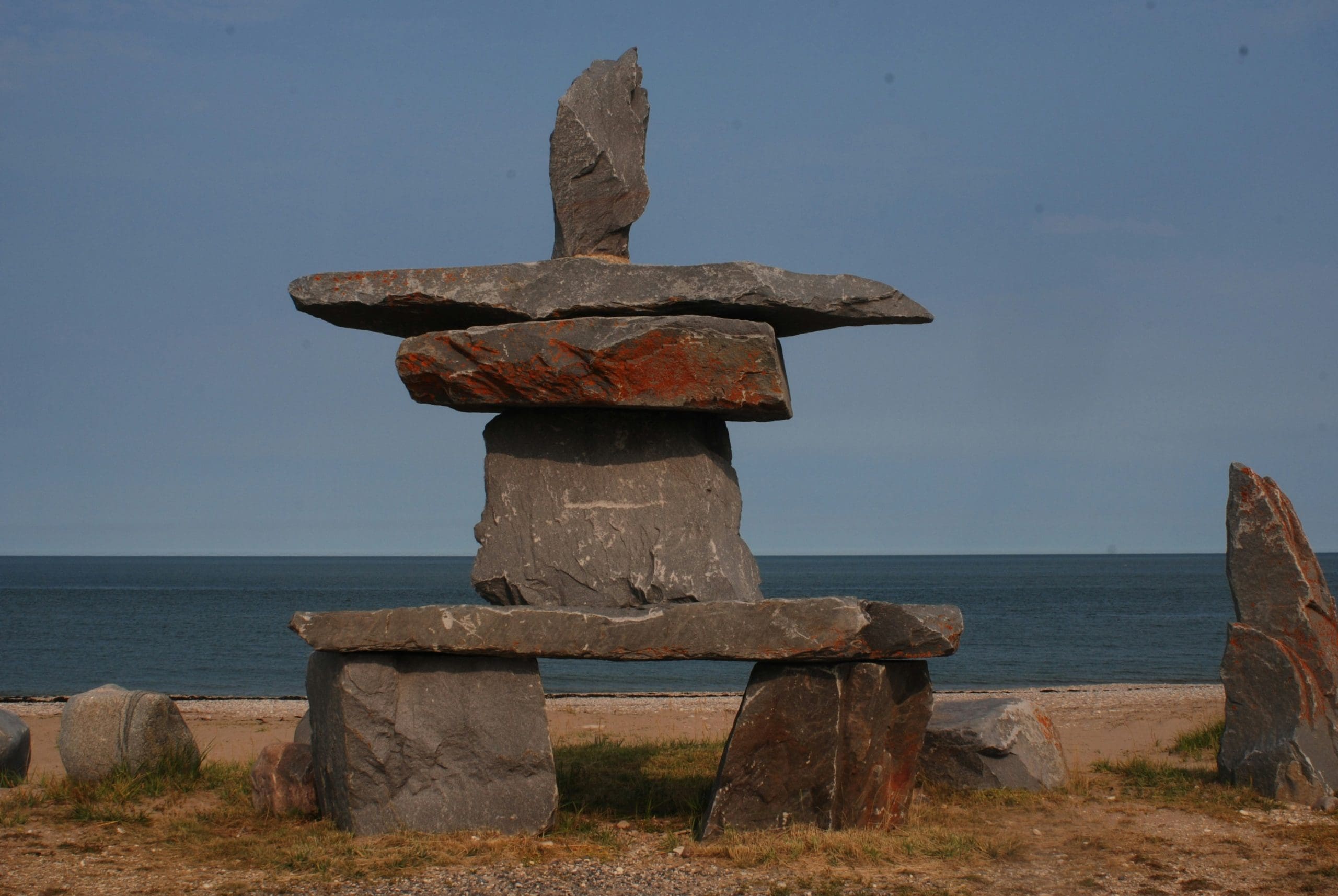
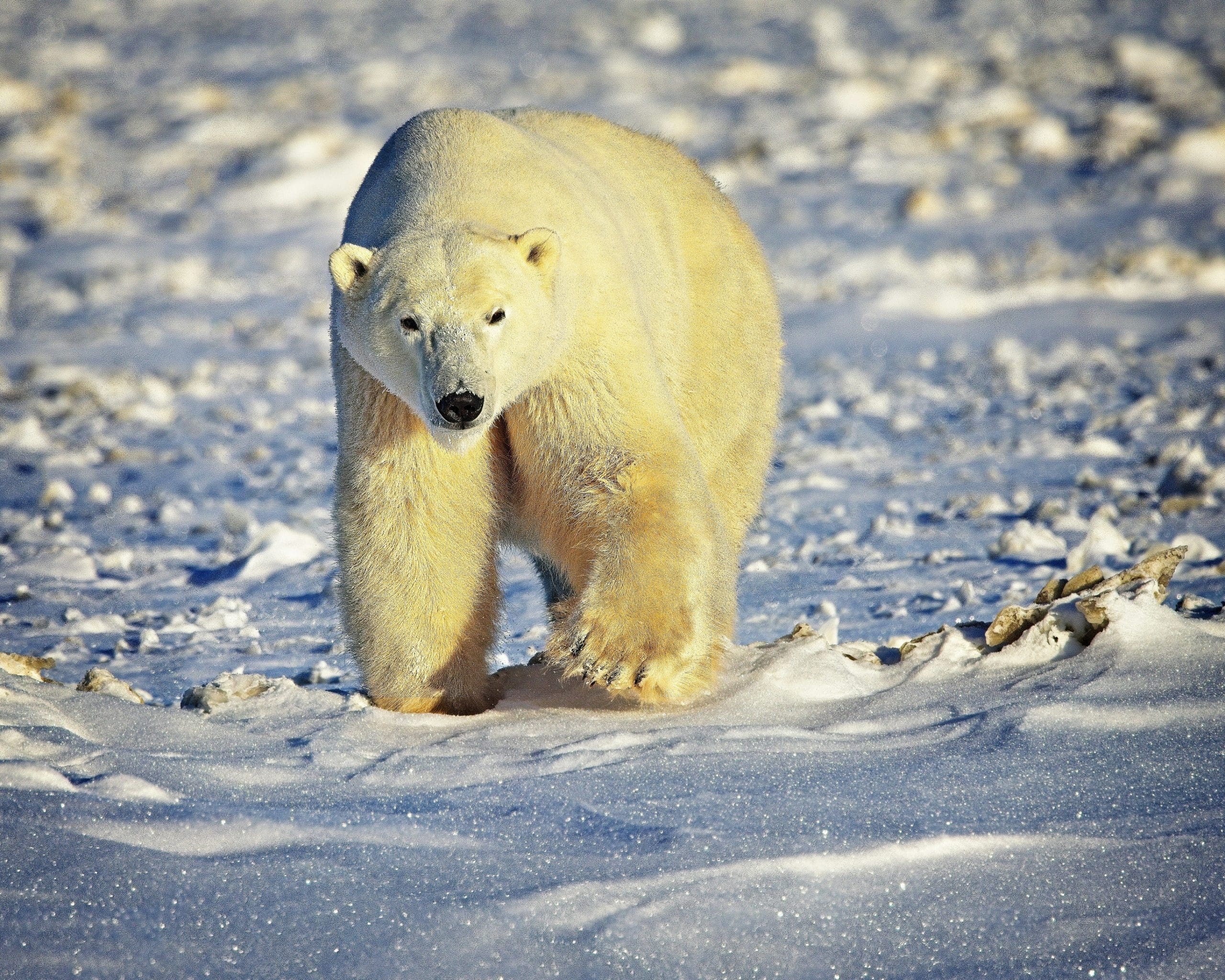
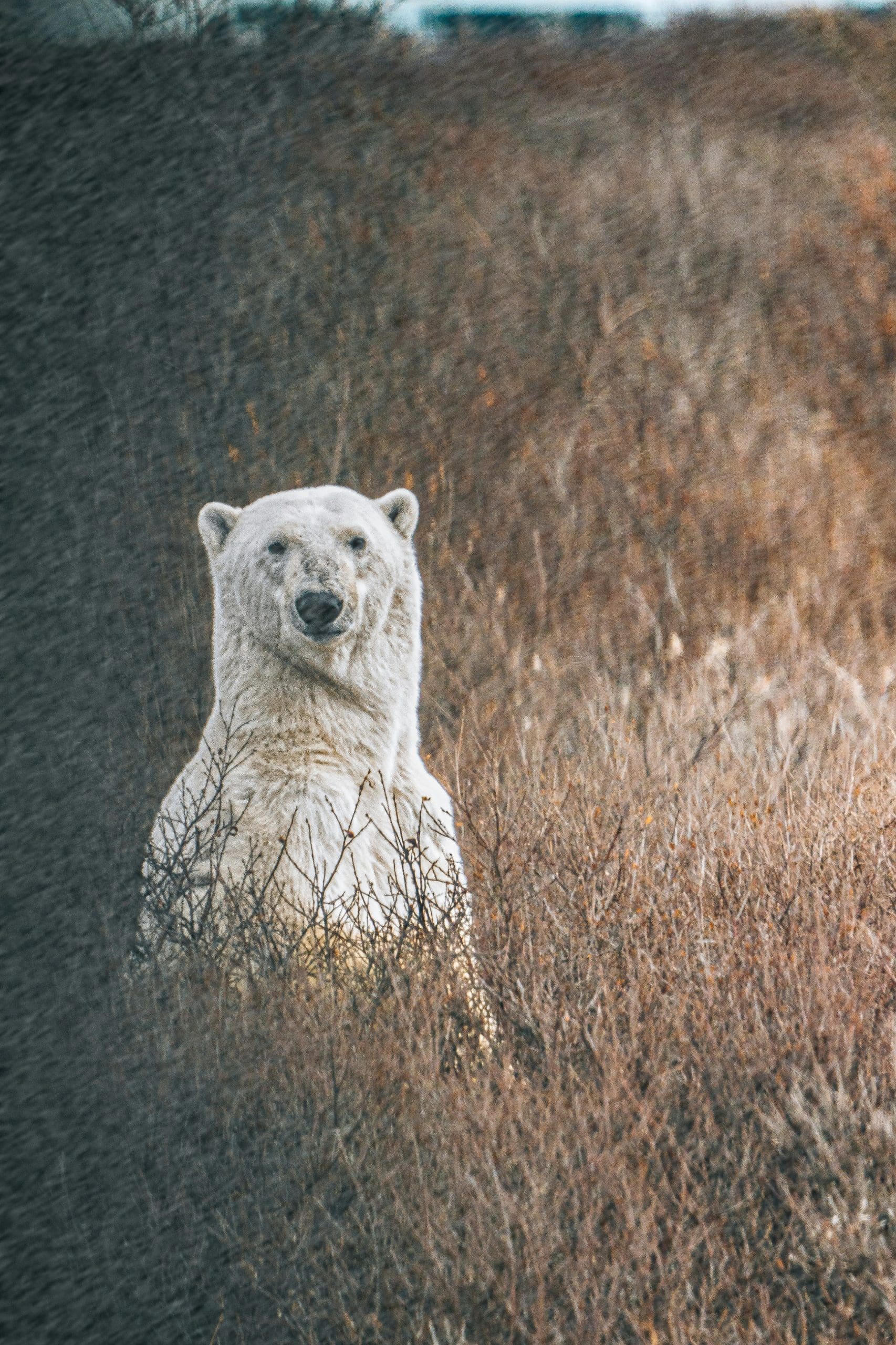
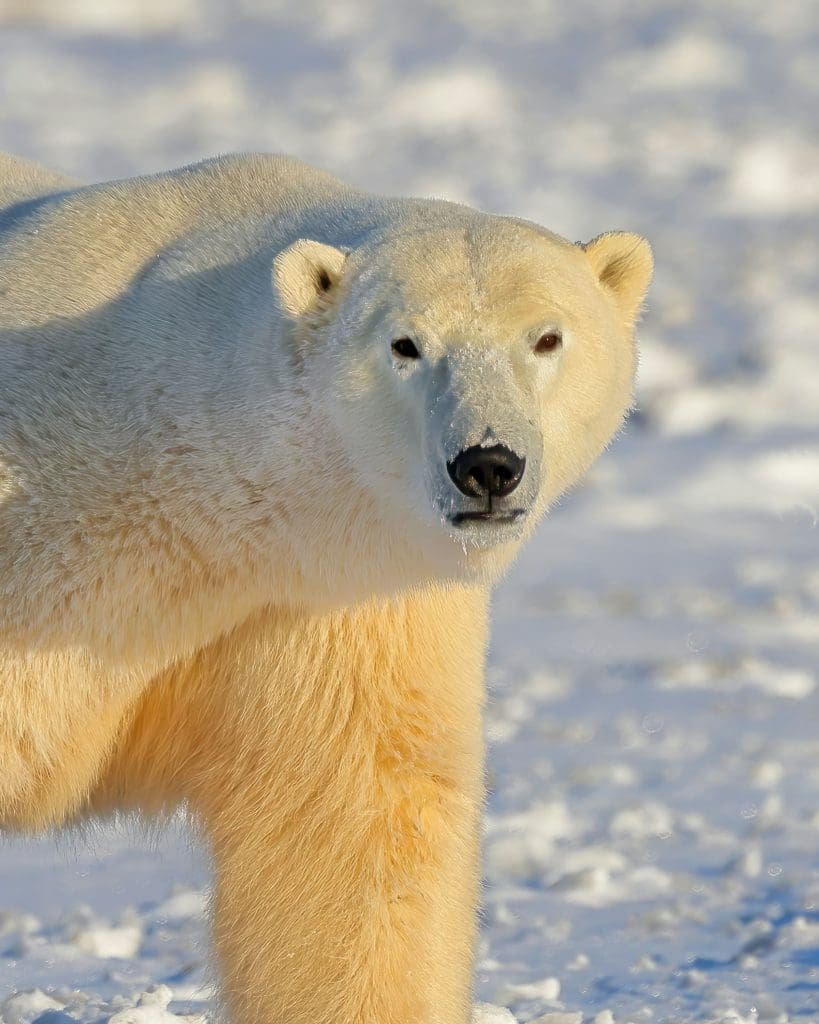
Polar bear viewing in Churchill exists because of a single point of geography: this stretch of the Hudson Bay coast is one of the first places the sea ice forms each autumn, and the Western Hudson Bay polar bears know it. As the bay’s edge starts to freeze, bears that have spent the summer fasting on shore move toward the coastline to wait, conserving energy until the ice is solid enough to carry them out after seals. It is why one small town has become the place most reliably associated with wild polar bears anywhere on earth. The numbers are worth stating plainly: the most recent survey counted around 618 bears in this population, down from 842 five years earlier, a reminder that this is a considered visit worth planning well rather than a casual add-on.
Timing within the season matters as much as the season itself. Early October still has a snow-free tundra and fewer bears working the coast, by mid to late October the numbers build to their peak, with the largest concentration of bears gathered and waiting, and early November tends to be the best window for spotting mothers with new cubs, in colder conditions and shorter, more dramatic light. By late November the bay begins to freeze in earnest and bears disperse out onto the ice, effectively ending the season until the following year. A late October or early November booking, rather than an early one, is the difference between a handful of distant bears and a coastline working with them.
The tundra buggy is what makes close, sustained viewing possible without disturbing the bears or putting anyone at risk. These are enormous, high-wheeled vehicles built specifically for the terrain, moving slowly along established routes through the Churchill Wildlife Management Area with an open viewing deck at the rear. Tundra Buggy Lodge takes this further: a mobile lodge that relocates on the tundra itself, putting guests within reach of the bears around the clock rather than only during a day’s drive out from town, though accommodation is in shared bunk cabins rather than private rooms, a trade worth knowing about upfront. It is a genuinely different rhythm to a day trip, several days spent inside the bears’ own territory rather than visiting it.
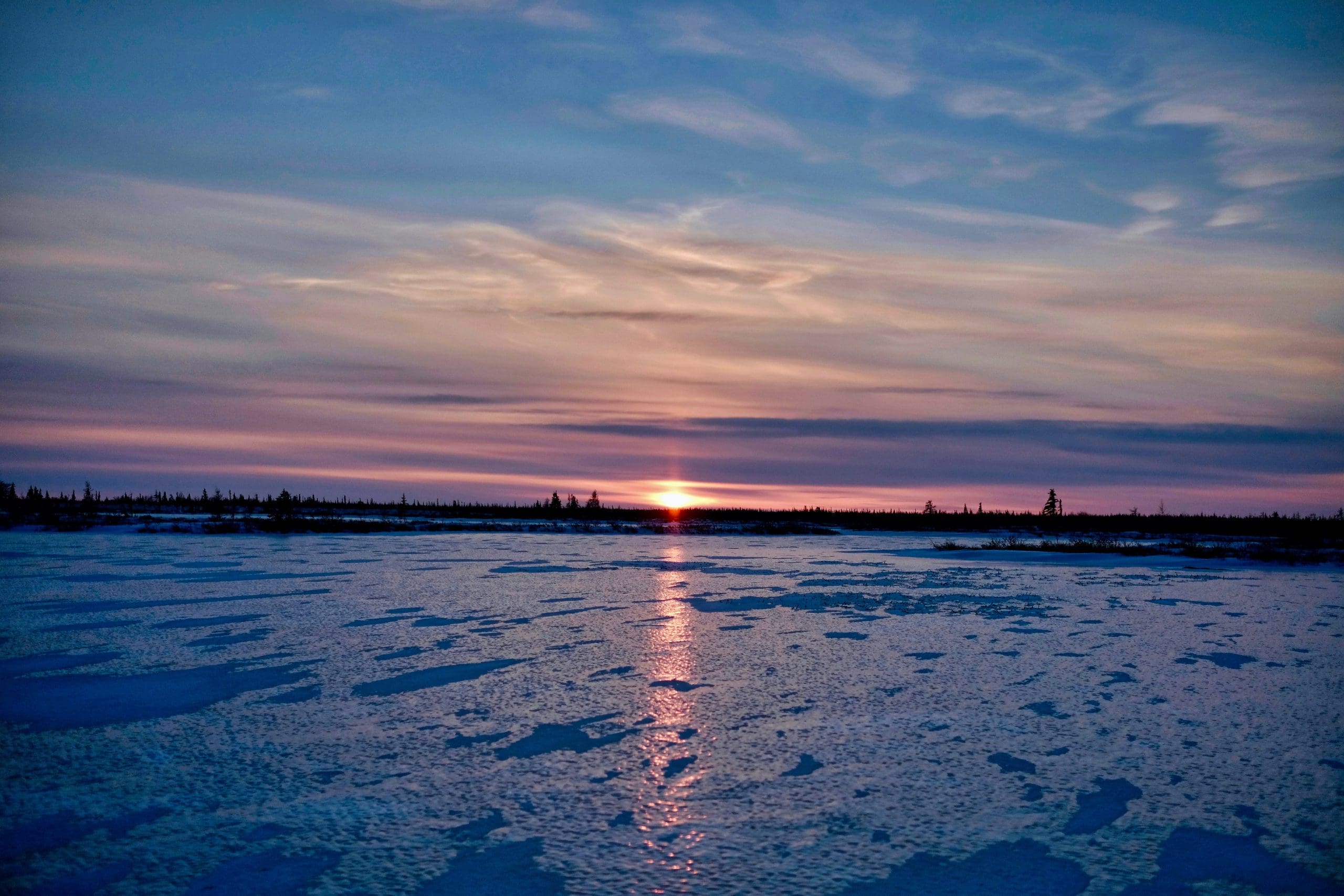
This is expedition-style travel rather than a straightforward add-on. Churchill has no road access. Getting there means a two-hour flight from Winnipeg or, for travellers who want the journey itself, a two-day train through the boreal forest, and daytime temperatures on the tundra typically sit between minus twelve and minus four degrees before wind chill. None of that makes the experience difficult so much as deliberate: warm layers, patience, and a real interest in the landscape rather than a quick tick of a box. The aurora is a real possibility too. Churchill sits under the auroral oval with a chance of sightings on many nights of the year, and while February and March are the true peak for clear, dark skies, an evening display during bear season is a genuine bonus rather than something to count on.


 Trustindex verifies that the original source of the review is Google.
 Trustindex verifies that the original source of the review is Google.
 Trustindex verifies that the original source of the review is Google.
 Trustindex verifies that the original source of the review is Google.
 Trustindex verifies that the original source of the review is Google.
 Trustindex verifies that the original source of the review is Google.
 Trustindex verifies that the original source of the review is Google.
 Trustindex verifies that the original source of the review is Google.
 Trustindex verifies that the original source of the review is Google.
 Trustindex verifies that the original source of the review is Google.
Travel rewards attention. Five for Fridays is our monthly letter from Ron: five things about the world worth knowing before you go – or before you decide where.