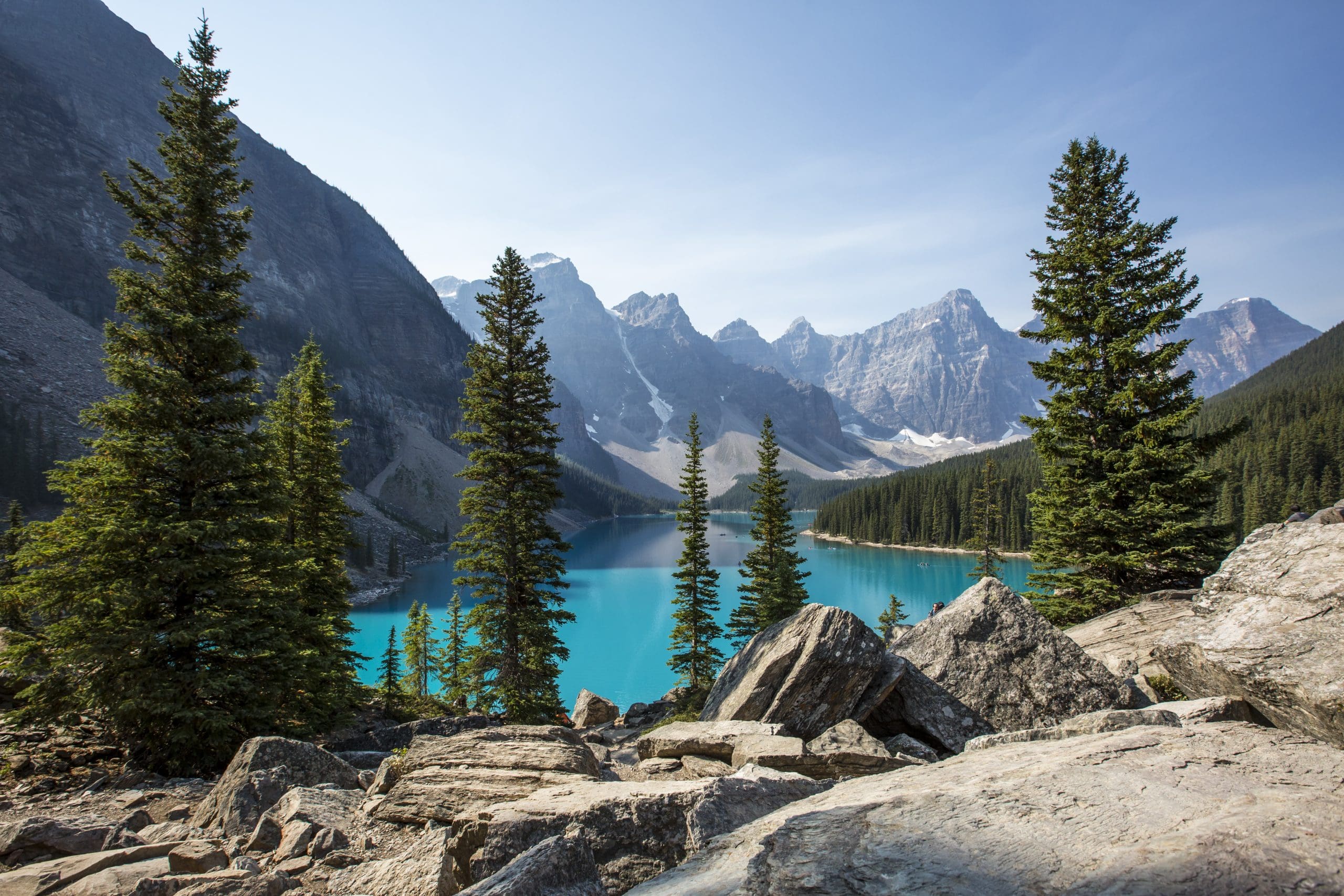
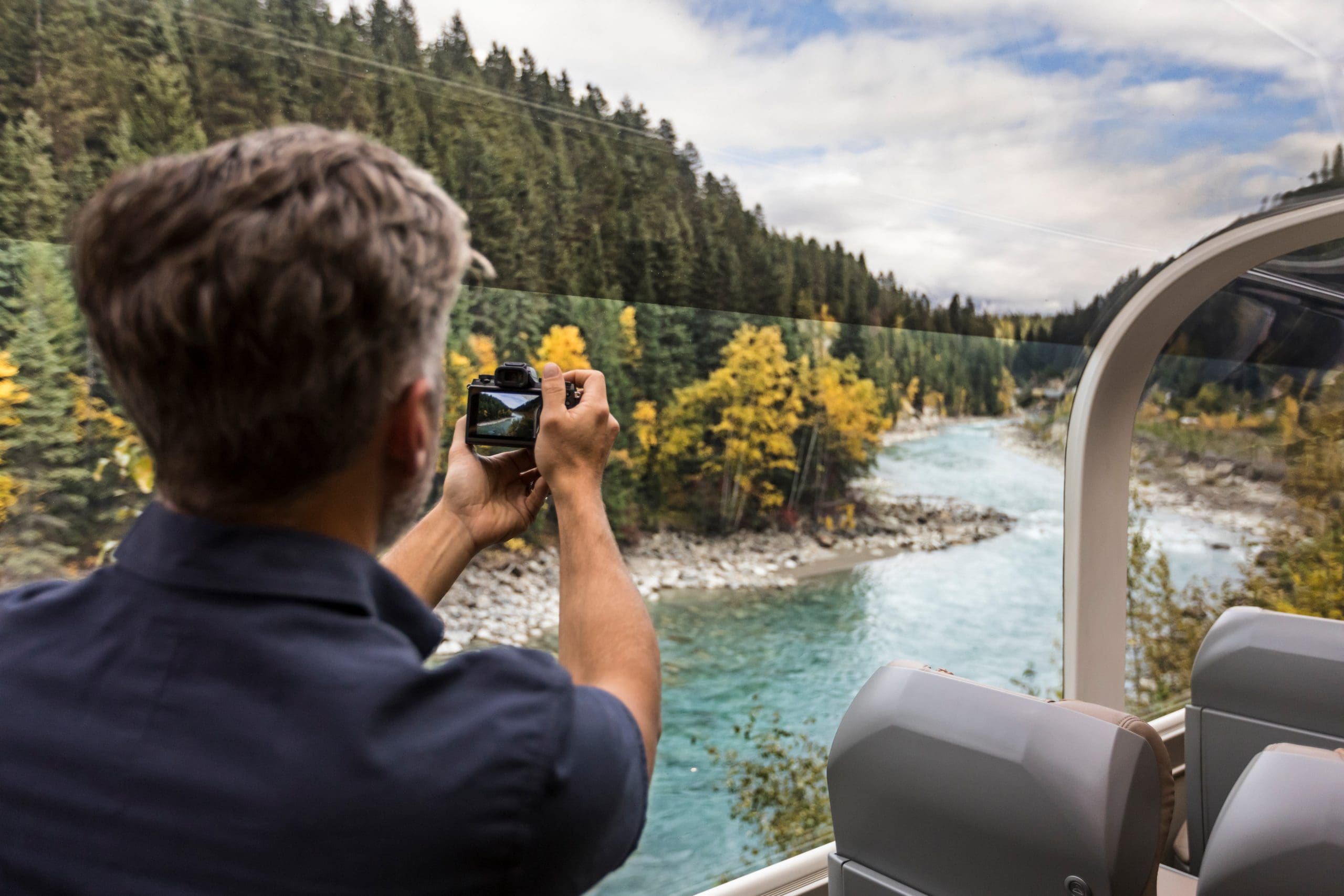
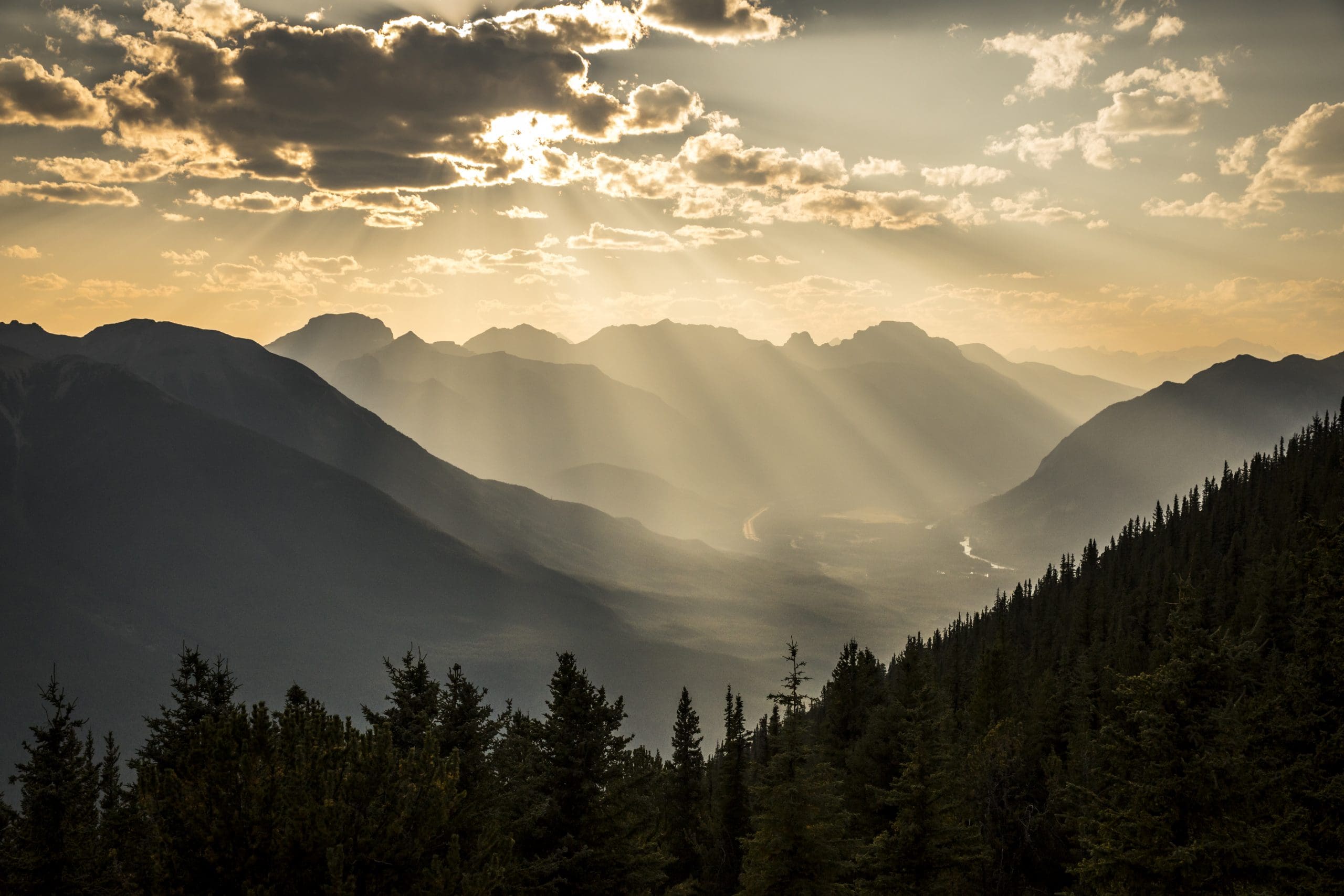
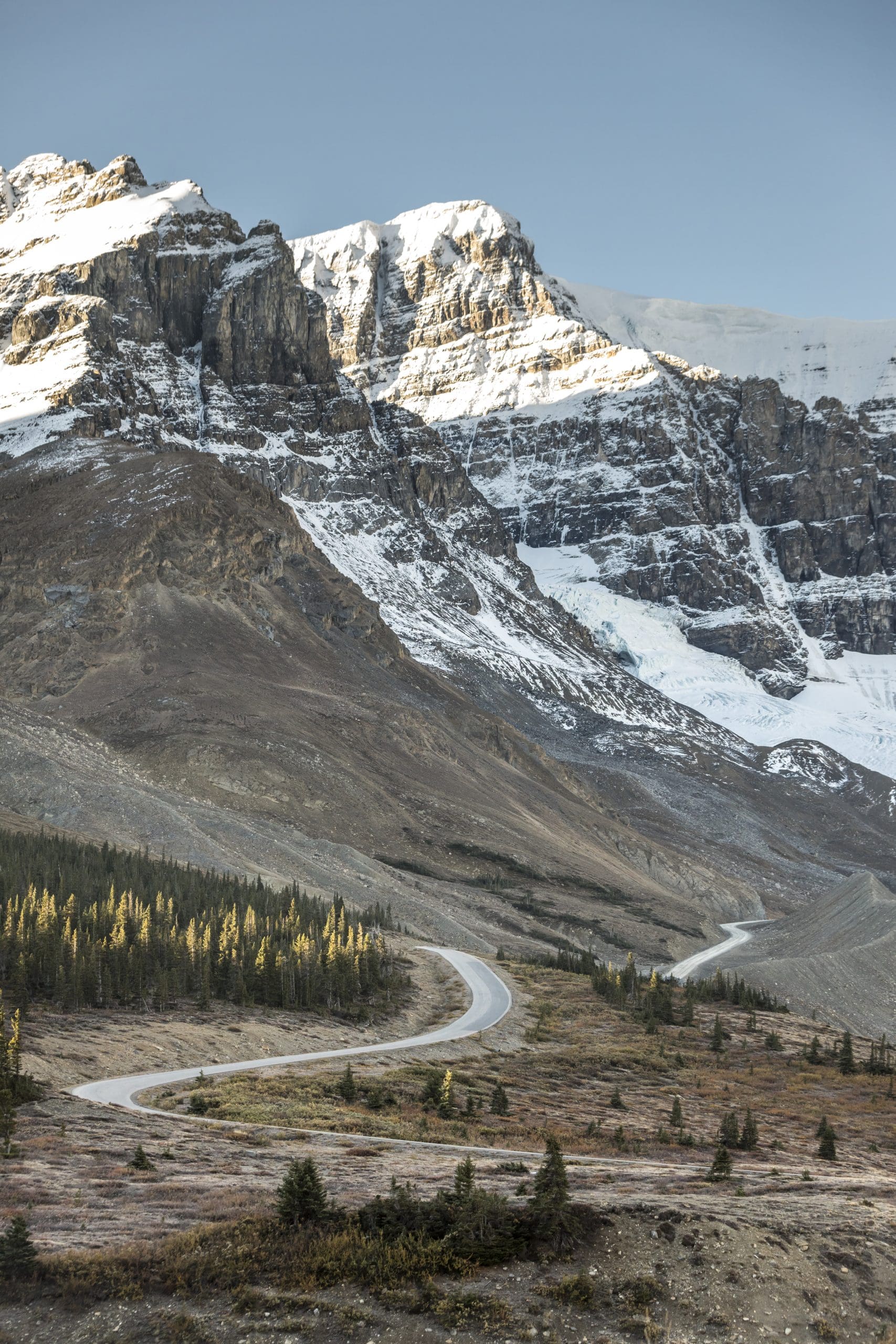
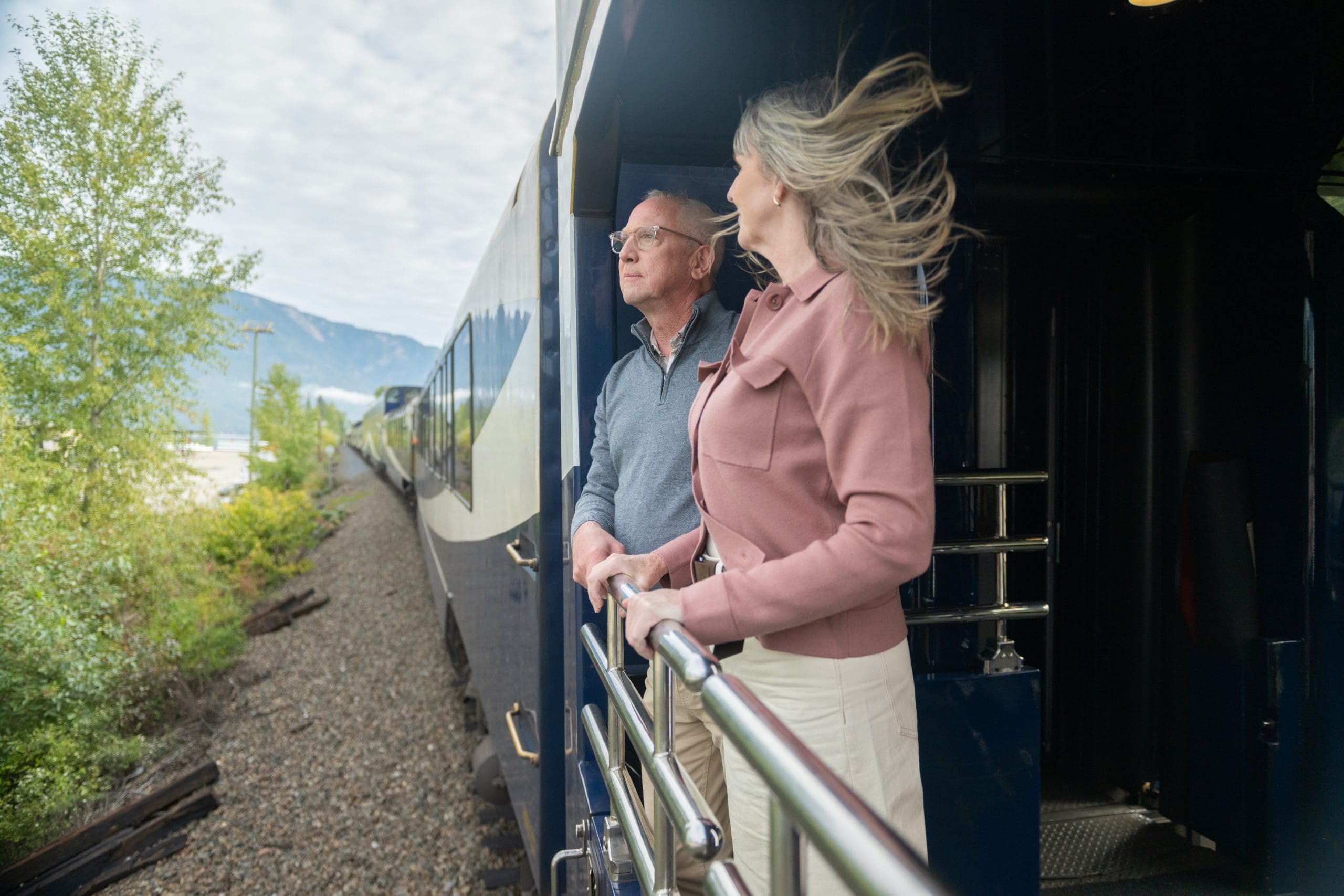
A Rocky Mountaineer train journey runs only in daylight, and that one decision shapes everything about it. Most of the world’s well-known luxury trains on multi-day routes are sleeper trains, where guests spend the night in a cabin and part of the landscape passes in the dark. Rocky Mountaineer covers the distance between the Pacific coast and the Canadian Rockies over two full days, stops each evening, and takes its guests to a hotel for the night, so the whole route is seen from the window. That matters on this line, which runs for long stretches through country largely untouched by settlement. Our founder spent six years living an hour from the Rocky Mountains, and they remain some of the most majestic scenery we know anywhere in the world. The clients we send describe the pace in the same way: very unhurried, with time to watch the country change from the farmland of the Fraser Valley through dry canyons to snow-capped peaks. Onboard hosts keep up the commentary throughout the day, entertaining and well informed, on the railway’s history, the engineering of the line and the wildlife to watch for, with interactive activities along the way.
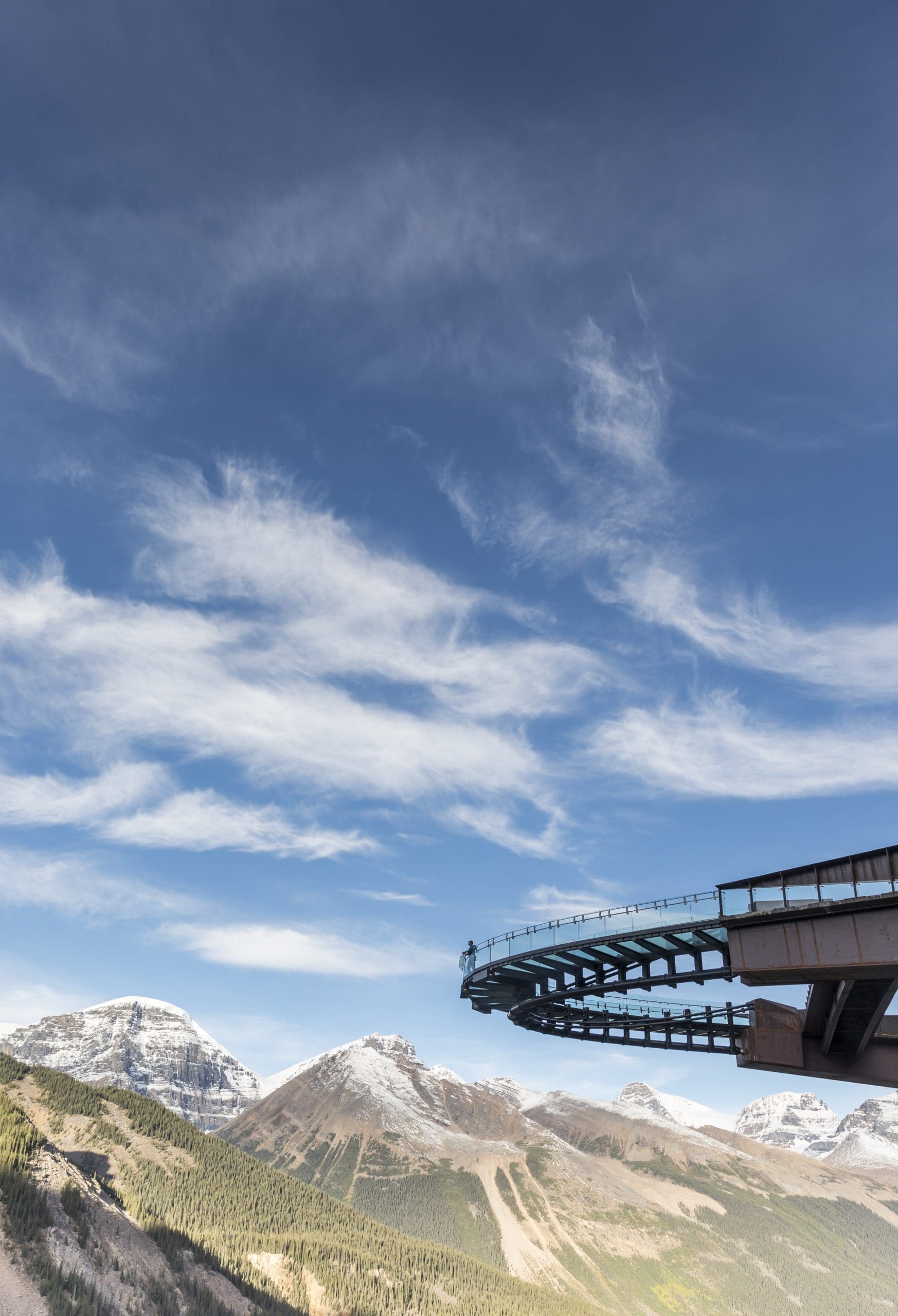
Two routes run from Vancouver, and both spend their first night in Kamloops after following the Fraser Canyon past the narrows of Hell’s Gate. First Passage to the West continues to Banff or Lake Louise along the line of Canada’s first transcontinental railway, passing Craigellachie, where the last spike was driven in 1885, and descending through the Spiral Tunnels, built in 1909 to carry trains over Kicking Horse Pass. Journey through the Clouds turns north to Jasper along the North Thompson River, passing Pyramid Falls, a waterfall of around 92 metres seen only from the rail line, and Mount Robson, at 3,954 metres the highest peak in the Canadian Rockies, before crossing Yellowhead Pass. The first suits travellers drawn to railway history and the classic mountain towns of Banff and Lake Louise. The second suits those who prefer remote country and the quieter town of Jasper.
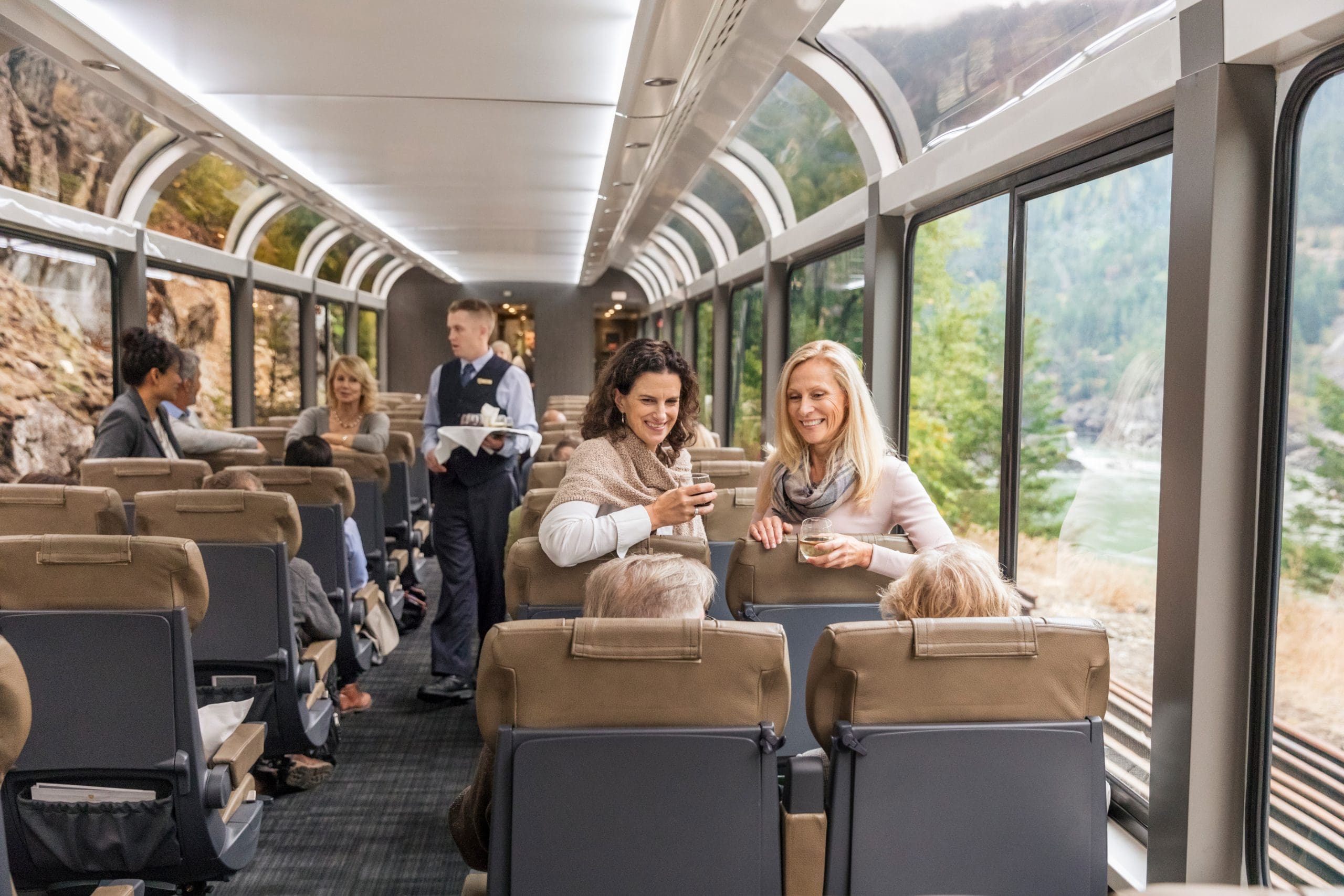
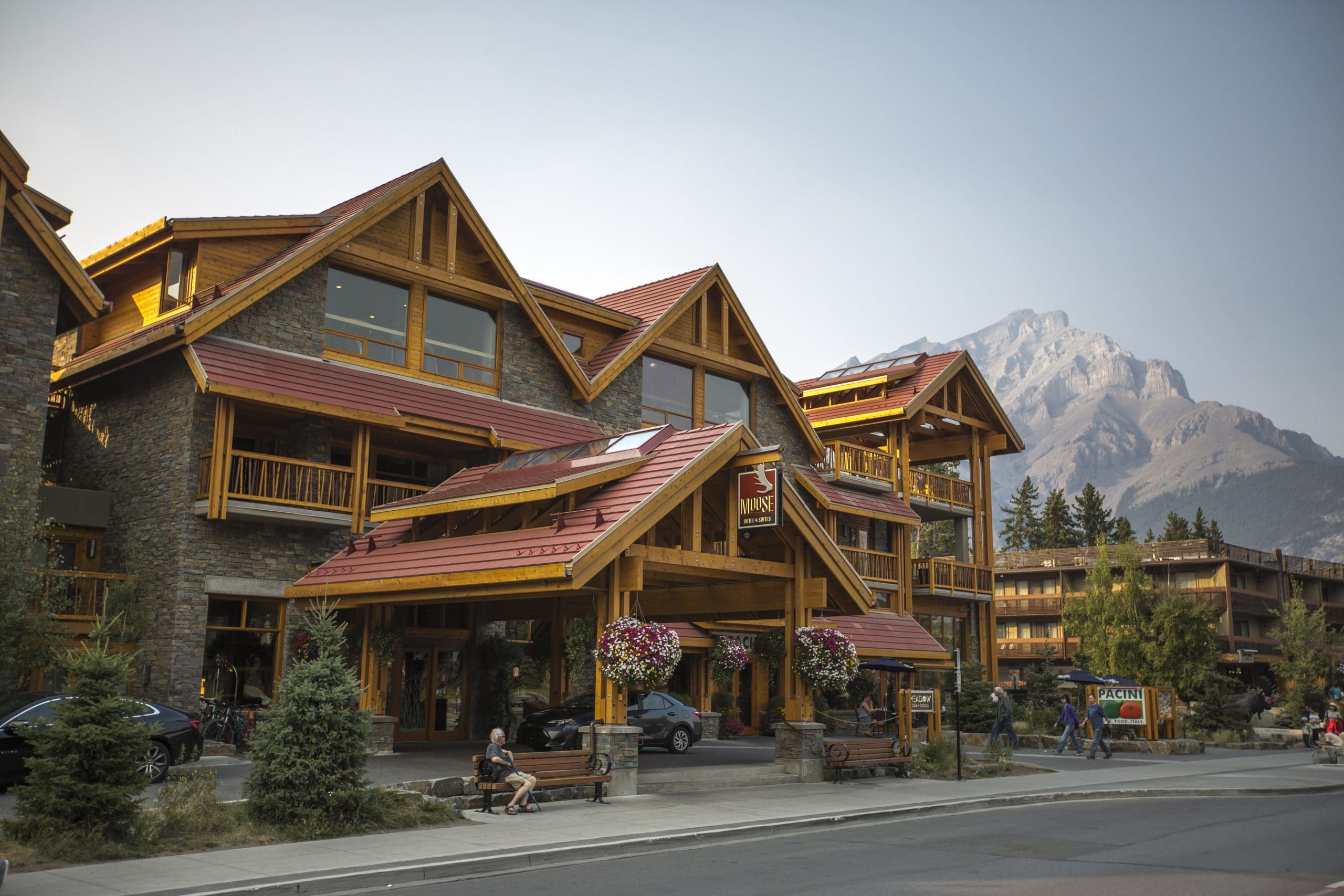
The hotels are a large part of why the journey works so well. Rocky Mountaineer itineraries generally use the finest heritage hotels along the way, among them the Fairmont Chateau Lake Louise on the shore of the lake and the Fairmont Banff Springs above the Bow River, and every transfer between train and hotel is handled. Kamloops is the one stop worth understanding in advance. The hotels used there are the best in the area, but they are a little more rustic than the rest of the journey, and the stay is short, with arrival in the evening and an early start the next morning. Onboard, there are two levels of service. SilverLeaf is closer to premium economy, in a single-level glass-dome coach with meals served at the seat. GoldLeaf is closer to business class, in a bi-level dome coach with a separate dining room below and an outdoor viewing platform.
This journey suits travellers who want the Rockies without driving the mountain roads themselves: first-time visitors to Canada, couples marking an occasion, travellers combining it with an Alaska cruise, and those who have held the intention for years. The season is short, running from mid-April to mid-October, with no departures from November to March, and seats are limited, so we book at least six to nine months ahead. Wildfire smoke can soften the views for a few days in some summers, most often in August, and fires have disrupted a small number of departures in recent seasons. Most of the journeys we build allow two or three nights in Vancouver beforehand and at least two in Banff, Lake Louise or Jasper afterwards, so the train becomes the centrepiece of a week or more in western Canada.


 Trustindex verifies that the original source of the review is Google.
 Trustindex verifies that the original source of the review is Google.
 Trustindex verifies that the original source of the review is Google.
 Trustindex verifies that the original source of the review is Google.
 Trustindex verifies that the original source of the review is Google.
 Trustindex verifies that the original source of the review is Google.
 Trustindex verifies that the original source of the review is Google.
 Trustindex verifies that the original source of the review is Google.
 Trustindex verifies that the original source of the review is Google.
 Trustindex verifies that the original source of the review is Google.
Travel rewards attention. Five for Fridays is our monthly letter from Ron: five things about the world worth knowing before you go – or before you decide where.